


How to Introduce a Rescue Dog to Your Resident Cat

A step-by-step guide to a peaceful first meeting — and a lasting friendship
Introducing a rescue dog to a resident cat is one of the most common concerns for adopters — and one of the most manageable with the right approach. Whether your cat has lived as the solo pet for years or has met dogs before, the way you handle those first days will shape the relationship for years to come.
The good news: most dogs and cats can learn to share a home peacefully. The process takes patience, a bit of planning, and an understanding of how each animal experiences stress. This guide walks you through every stage, from preparing your home before your new dog arrives to navigating that all-important first face-to-face meeting.
Key Takeaways
- Prepare before the dog arrives — set up safe, separate spaces for each animal before day one
- Scent swapping comes first — let both animals smell each other before they ever see each other
- Visual introductions before physical ones — use a baby gate or cracked door before any face-to-face meeting
- Your cat needs guaranteed escape routes — high perches and cat-only zones are non-negotiable
- Go at your animals' pace — rushing the process is the most common mistake adopters make
- Most introductions succeed — with structure and consistency, dogs and cats coexist successfully in millions of households
Why Rescue Dogs Need a Specific Introduction Strategy
A rescue dog's history is often unknown or incomplete. Some have lived with cats before; others have never encountered one. Some carry anxiety from shelter life that makes new experiences feel more threatening than they would for a dog raised in a stable home.
This uncertainty isn't a reason to avoid adopting — it's a reason to be deliberate. A structured introduction gives your rescue dog clear signals about what's expected, while giving your cat the control and escape options they need to feel safe. The goal of every introduction step is to prevent a negative experience, not just to enable a positive one.
One bad chase, one cornered cat, one startling lunge — any of these can set back trust by weeks. Slow and structured isn't overcautious; it's efficient.
Step 1: Prepare Your Home Before the Dog Arrives
Before your rescue dog ever walks through the front door, your home should already be reorganized around your cat's needs. This is the step most adopters skip — and it's the one that matters most.
Create a cat sanctuary room
Designate one room as entirely off-limits to the dog. This is where your cat's food, water, litter box, and bed will live during the transition. Your cat should be able to retreat there at any time without encountering the dog. A baby gate with a small cat door (or a gate your cat can jump but the dog cannot) works well for most setups.
Set up vertical escape routes throughout the home
Cats feel safest when they can observe from above. Add or rearrange cat trees, shelving, or furniture so your cat has high ground in every room they use. These escape routes are essential — a cat who feels trapped is far more likely to scratch, hiss, or develop lasting anxiety.
Feed them on opposite sides of a closed door from day one
Even before any visual contact, place your cat's food bowl and the dog's food bowl on opposite sides of the sanctuary room door. This builds a positive association with each other's scent during a calm, rewarding moment.
Step 2: Start With Scent — Not Sight
Animals gather enormous amounts of information through smell. Scent swapping is the practice of letting each animal investigate the other's bedding, toys, or a cloth rubbed on their face — before any visual contact happens.
On day one, give your rescue dog a blanket or toy that carries your cat's scent. Place it near the dog's sleeping area. Do the same for your cat with something that smells like the dog. Watch their reactions: calm curiosity is great; intense fixation, stiff body language, or agitation from the dog warrants slowing down.
Spend two to five days on scent swapping alone. It may feel like nothing is happening, but you're building the foundation for a smooth visual introduction.
Step 3: The Visual Introduction — Barrier First
Once both animals seem relaxed around each other's scent, it's time for visual contact — still with a barrier between them. A tall baby gate, a slightly cracked door, or a screen door all work well.
Keep the dog on leash during this stage. Let your cat approach the barrier at their own pace — never force proximity. Give the dog calm praise for relaxed, disinterested behavior around the cat. If the dog lunges, barks, or fixates intensely on the cat, calmly redirect their attention and increase the distance.
What you're looking for: a dog who can look at the cat and then look away, and a cat who can approach the barrier without fleeing immediately. Both are signs you can begin moving toward supervised in-room meetings.
"The single biggest predictor of a successful dog-cat relationship is whether the dog can disengage from the cat on cue. That's the skill worth training before and during the introduction process."
— American Kennel Club, Behavior Resources
Step 4: The First In-Room Meeting
When both animals consistently show relaxed body language at the barrier, you're ready for supervised time in the same room. Keep the dog on a leash — not to restrict them harshly, but to prevent sudden movement that could frighten the cat.
Keep early sessions short
Start with five to ten minutes. Reward the dog for calm behavior with quiet praise or treats. Let the cat move freely, approach if they choose, and retreat whenever they like. Do not hold or restrain the cat — they need to feel in control of the interaction.
Watch body language closely
Signs the meeting is going well include loose, wiggly dog body language, a cat who sniffs curiously without puffing up, and mutual disinterest after initial investigation. Signs to end the session and slow down include hard staring from the dog, tail lashing from the cat, a frozen or stiff posture in either animal, or any vocalization from the cat beyond mild hissing.
A single hiss from your cat is normal communication — it's your cat saying "too close." Persistent hissing, growling, or a dog that won't stop fixating on the cat means more time at the barrier stage.
How Long Does a Dog-Cat Introduction Actually Take?
Honest answer: anywhere from a few days to several months. A confident cat meeting a calm, cat-experienced dog might reach relaxed coexistence within a week. A nervous cat meeting an excitable hound mix might need six to eight weeks of gradual exposure before they share the same room comfortably.
The three-three-three rule — commonly used with rescue dog adjustment — applies here too: three days of overwhelm, three weeks of learning the routine, three months of feeling at home. Most dog-cat introductions follow a similar arc. Progress isn't always linear, and that's completely normal.
If you've adopted from WeRescue , reach out to the rescue organization or shelter you adopted from. Many have behaviorists or volunteers experienced with multi-species households who can offer personalized guidance.
Frequently Asked Questions
What if my rescue dog has a high prey drive?
High prey drive doesn't automatically disqualify a dog from living with cats, but it does require more caution and a slower timeline. Dogs with strong prey drive should never be left unsupervised with a cat until coexistence has been proven reliable over many weeks. Some dogs with very high prey drive are genuinely not safe with cats — consult with a certified animal behaviorist if you're uncertain.
Should I let them "work it out" on their own?
No. Unsupervised access before trust is established is the most common cause of failed introductions. A single chase or aggressive encounter can create lasting fear in a cat and rehearse predatory behavior in a dog. Structured introductions protect both animals and lead to better long-term outcomes.
My cat is hiding since the dog arrived. Is that normal?
Yes, temporary hiding is a normal stress response for cats. Ensure your cat has access to food, water, and a litter box in their safe room, and avoid forcing interaction. Most cats gradually become curious and re-emerge on their own timeline. If your cat stops eating or shows signs of illness after several days, consult your veterinarian.
How do I know if the introduction is failing?
Warning signs include a dog that cannot be redirected away from the cat, a cat that stops eating or using their litter box, escalating aggression in either direction, or a cat that remains completely hidden for more than two weeks. In these cases, a certified applied animal behaviorist (CAAB) or veterinary behaviorist can assess the situation and provide a tailored plan.
Can I search for dogs that are known to be cat-friendly?
Absolutely. When browsing adoptable pets on WeRescue , you can filter by animals noted as good with cats. Many rescue listings include behavioral notes from foster families who have firsthand knowledge of how a dog responds to feline housemates.
Ready to Find a Dog Who's Right for Your Whole Family?
A cat at home isn't a barrier to adoption — it's just one more thing to match thoughtfully. Thousands of rescue dogs are already proven to be calm and cat-friendly, waiting for exactly the right home. WeRescue connects you with adoptable pets from shelters and rescues across the country, with detailed profiles to help you find the right fit for every member of your household, two-legged and four.
-
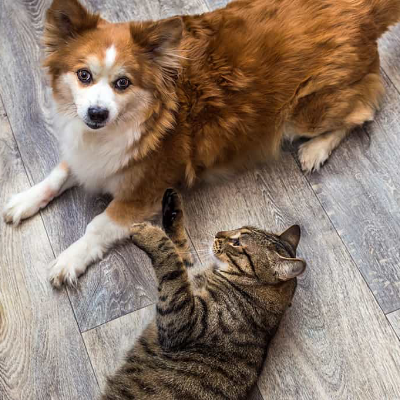 Peaceful Paws: Mastering the Art of Multi-Pet Harmony at Home
-
The 3-3-3 Rule for Rescue Dogs: Adjustment Guide
-
Reading Rescue Dog Stress Signals: From Shelter to Home Confidence
-
 Deciphering the Enigmatic World of Cat Body Language
-
Feline-First Design: Vertical Space & Catios
Disclaimer: This blog post is intended for educational and informational purposes only and is not meant to substitute for professional advice.