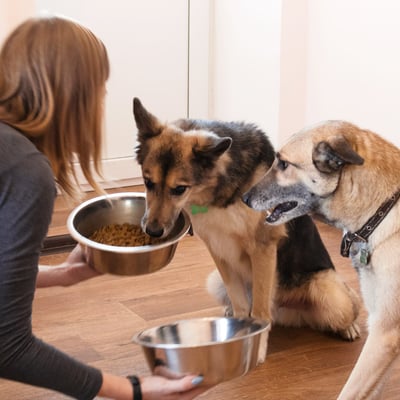
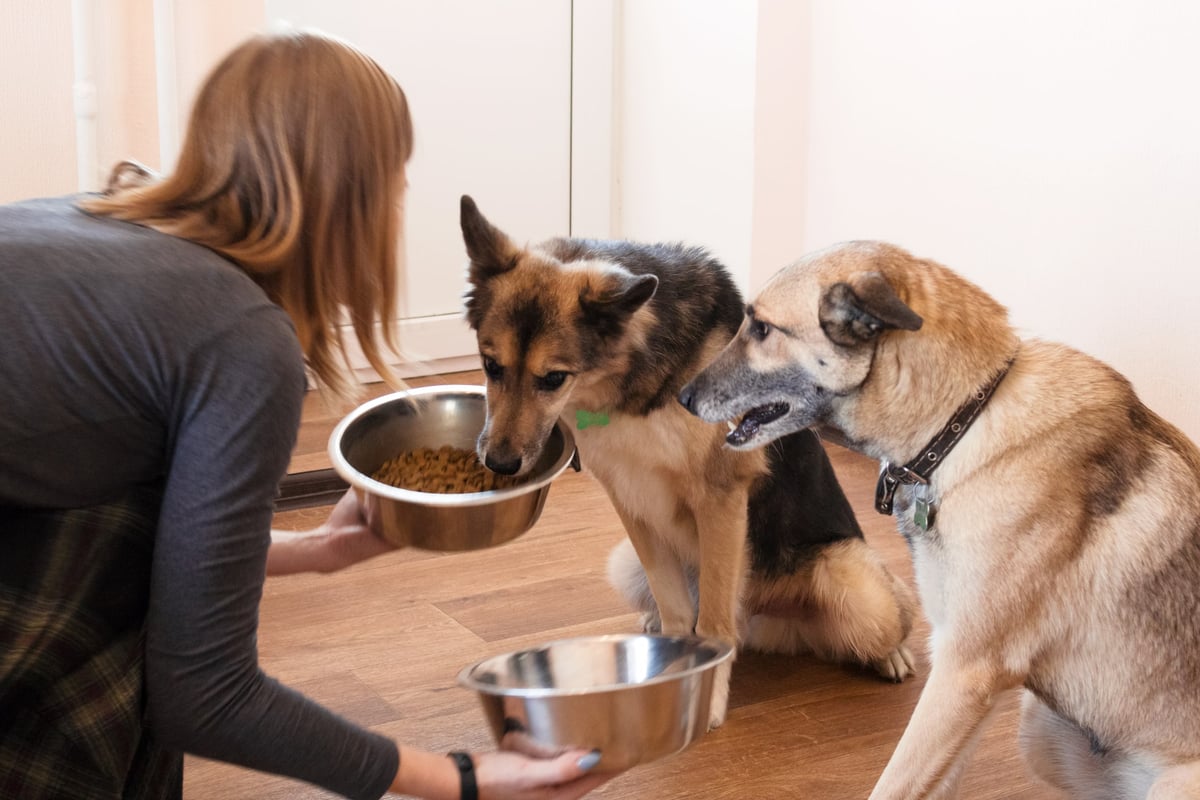
Your new rescue dog seemed perfect—until you walked past her food bowl and she froze, stared, and let out a low growl. Or maybe your adopted pup snatches toys and runs to a corner, showing teeth if anyone approaches. If this sounds familiar, you're dealing with resource guarding, one of the most common (and most misunderstood) behavior challenges in rescue dogs.
The good news: resource guarding is manageable, and in many cases, it can be significantly reduced with the right approach. The bad news: handling it incorrectly can make things much worse—and potentially dangerous. This guide will help you understand why your rescue dog guards, recognize the warning signs, and learn safe techniques that actually work.
What Is Resource Guarding?
Resource guarding—sometimes called "possessive aggression" or "food aggression" when food is involved—occurs when a dog uses threatening behavior to maintain control of something valuable. The dog perceives a threat to their resource and responds defensively.
While food is the most recognized trigger, dogs can guard almost anything they consider valuable: toys, chews, sleeping spots, stolen items (socks are a classic), furniture, doorways, their crate, and even their favorite human. One behaviorist reported working with a dog who aggressively guarded an open dishwasher—the resource doesn't have to make sense to us.
Resource guarding behaviors typically fall into two categories. "Fight" responses include freezing over an item, hard staring, growling, snarling, snapping, and biting. "Flight" responses involve grabbing the item and running, gulping food rapidly, or hiding treasures in corners or under furniture. Many dogs display both patterns depending on the situation.
Research from the Tompkins County SPCA found that approximately 15% of shelter dogs display resource guarding during behavioral evaluations. Among those dogs, the most common guarding behavior was freezing (a subtle warning), while lunging was the least common (a severe escalation). This tells us most resource guarders give plenty of warning signs before things escalate—if we know what to look for.
Why Rescue Dogs Guard: Understanding the Root Causes
To address resource guarding effectively, it helps to understand why your rescue dog developed this behavior in the first place. While some guarding has genetic components, many rescue dogs learn to guard through experience.
Survival History
Dogs who lived as strays had to compete for every meal. Food wasn't reliably available, so protecting what they found was literally a survival skill. This instinct doesn't simply disappear when a dog moves into a home with regularly scheduled feedings. Their brain still signals "protect this to survive," even when the threat is gone.
Similarly, dogs from hoarding situations, puppy mills, or overcrowded shelters often learned that resources were scarce and competition was fierce. In these environments, the dogs who ate fast and defended their portion were the ones who got enough nutrition.
Previous Negative Experiences
Sometimes resource guarding develops because a dog learned that humans approaching means good things get taken away. If previous owners grabbed food bowls mid-meal "to show dominance," snatched toys without offering trades, or punished the dog for having forbidden items, the dog may have learned: "When humans approach, I lose my stuff. Next time, I'll warn them off."
This is why the old advice to "take your dog's food bowl while they're eating to show them who's boss" is so counterproductive. It doesn't teach the dog to accept your approach—it teaches them that their concerns were justified and they need to try harder to protect their resources.
Anxiety and Insecurity
Resource guarding is fundamentally rooted in anxiety, not dominance. The dog isn't trying to "control" the household or challenge your authority—they're worried about losing something they value. This distinction matters because the approach that works (reducing anxiety through positive associations) is the opposite of what dominance-based training would suggest (confrontation and punishment).
Dogs in the adjustment period after adoption are particularly vulnerable to developing or intensifying guarding behaviors. Everything in their world just changed, creating heightened anxiety. If your rescue showed no guarding at the shelter but develops it after a few weeks in your home, this is actually common—they're settling in enough to establish preferences and start protecting them.
Genetic Predisposition
Some dogs have a stronger genetic tendency toward resource guarding, just as some breeds are more prone to herding or retrieving behaviors. This doesn't mean the behavior can't be modified, but it may mean the dog will always need some level of management. A dog with pure genetic food guarding (guarding only food, not other items) may be more challenging to fully "cure" than a dog who learned the behavior through experience.
Medical Issues
Pain, illness, or cognitive decline can trigger new resource guarding in dogs who never showed it before, or intensify existing guarding. A dog with arthritis may guard their bed because getting up and down is painful. A senior dog with cognitive changes may become confused and defensive. If your rescue suddenly develops guarding behavior or existing guarding intensifies without clear cause, a veterinary exam should be your first step.
Warning Signs: Reading Your Dog's Body Language
One of the most dangerous misconceptions about resource guarding is that bites "come out of nowhere." In reality, dogs almost always give warning signals—we just miss them. Learning to recognize early warnings gives you time to de-escalate and keeps everyone safer.
Subtle Early Warnings
The earliest signs are easy to miss if you're not watching for them. Your dog may freeze briefly when you approach—the body stiffens and movement stops, even for just a second. You might notice a hard stare directed at you, or "whale eye" where the whites of the eyes become visible because the dog turns their head slightly while keeping their eyes fixed on you. Eating or chewing speed may increase suddenly, as the dog tries to consume the resource before it can be taken. The dog might also position their body over the item, blocking access.
Moderate Warnings
If early signals don't work, most dogs escalate to clearer warnings. Lip lifting to show teeth, low growling, and raised hackles (the fur along the spine standing up) are all moderate warning signs. The dog may also turn their head away while keeping their body tensed over the resource—this isn't relaxation, it's a warning that they're preparing to defend.
Severe Warnings
Snapping (biting at air without making contact), lunging, and biting represent the final escalation. Dogs generally prefer not to reach this point—fighting is dangerous and energy-intensive. If your dog is regularly snapping or biting without displaying earlier warning signs, that's often because previous warnings were punished or ignored, teaching the dog to skip straight to more serious measures.
Never punish growling. A growl is communication, not defiance. When you punish a growl, you don't eliminate the dog's discomfort—you just eliminate the warning, making a bite more likely to "come out of nowhere."
What NOT to Do: Common Mistakes That Make Guarding Worse
Before we discuss effective techniques, let's address approaches that seem logical but actually backfire. Many well-intentioned owners accidentally intensify resource guarding by following outdated or incorrect advice.
Don't Forcefully Remove Items
Grabbing resources away from a guarding dog confirms their fear: "See? I was right to protect this—they DO take my stuff!" Each time you forcefully remove an item, you reinforce the belief that your approach is threatening. The dog learns they need to guard harder next time.
Don't Punish the Warning Signs
Yelling at, alpha-rolling, or otherwise punishing a dog for growling or showing teeth doesn't address the underlying anxiety. It just teaches the dog that warning you is dangerous. Many "unpredictable" dogs who bite without warning were actually trained to skip their warning signals by owners who punished those signals.
Don't "Show Dominance" Around Food
Sticking your hands in the food bowl, taking food away mid-meal, making the dog wait while you pretend to eat first, or hand-feeding every meal to "control" food access—these dominance-based techniques create the exact dynamic that causes resource guarding. The dog learns that mealtimes involve stress and competition rather than security and predictability.
Don't Test Your Dog Repeatedly
If you know your dog guards, don't keep approaching their resource "just to see what happens" or to prove a point. Every guarding episode is practice that reinforces the behavior. Management (preventing situations where guarding occurs) is an essential part of treatment, not a cop-out.
Don't Expect Instant Results
Resource guarding develops over time and must be addressed over time. Expecting a quick fix leads to frustration and often causes people to escalate to punishment when positive techniques "aren't working fast enough." With consistent training, most dogs show significant improvement within weeks to months—but the timeline depends on the dog's history and severity.
Effective Techniques: What Actually Works
The gold standard for addressing resource guarding is counterconditioning and desensitization—changing the dog's emotional response to your approach from "threat" to "good things happen." This takes patience, but it works.
Management First
Before you begin training, implement management strategies to prevent guarding episodes. Feed dogs separately if you have multiple pets. Pick up high-value items (bones, Kongs, stolen treasures) when you can't supervise. Use baby gates to create safe zones. Don't set your dog up to fail—every successful guarding episode reinforces the behavior.
Management isn't failure. For some dogs, especially those with severe guarding, permanent management may be part of the solution. There's nothing wrong with always feeding your dog in a separate room if that keeps everyone safe and stress-free.
The "Trade" Game
Teaching a reliable trade—"give me that, and you'll get something even better"—is one of the most valuable skills for managing resource guarding. Start with low-value items your dog doesn't guard strongly. Approach calmly, offer an amazing treat (cheese, hot dog, real meat), and take the item as they eat the treat. Immediately return the item or give something equally good.
The key insight: your dog learns that giving things up doesn't mean losing—it means getting something better AND usually getting the original item back too. Practice dozens of times with low-value items before attempting with higher-value ones.
Approach = Good Things Happen
For food bowl guarding specifically, start by dropping treats INTO the bowl as you walk past—don't reach toward it, don't stop, just drop something amazing and keep walking. Over many repetitions, your dog learns that your approach predicts a bonus, not a threat.
Gradually decrease distance and increase pause time. Eventually, you can approach, drop treats, and briefly touch the bowl (add more food, don't remove it) before moving away. The progression should be slow enough that your dog never shows guarding behavior during training. If they tense up, you've moved too fast—go back to easier steps.
Teach "Drop It" and "Leave It"
These commands give you verbal tools for managing guarding situations. Teach them with positive reinforcement using items your dog doesn't guard, then gradually generalize to more challenging situations. A dog who reliably drops items on cue is much easier to live with than one you must physically pry things away from.
Build Confidence Through Predictability
Anxious dogs benefit from predictability. Feed at consistent times. Provide multiple water bowls so one doesn't become a scarce resource. Give chews in designated spots where the dog feels secure. The more your dog trusts that resources will be reliably available, the less urgently they need to protect each one.
When to Seek Professional Help
While mild resource guarding can often be addressed with the techniques above, some situations require professional intervention. Don't hesitate to consult a qualified trainer or veterinary behaviorist if:
Your dog has bitten someone (breaking skin) during a guarding incident. Bites that cause injury indicate the behavior has escalated beyond what basic training can safely address at home.
There are children in the household. Children move unpredictably and may not recognize or respect warning signs. A professional can help create management protocols and assess whether the situation is safe.
Guarding is escalating despite consistent positive training. If you've been working on counterconditioning for weeks without improvement—or if the behavior is getting worse—something in your approach may need adjustment, or there may be underlying factors (medical, anxiety disorders) that require additional intervention.
You feel unsafe. Trust your instincts. If your dog's guarding behavior makes you nervous about routine interactions, get help before someone gets hurt.
When seeking professional help, look for trainers certified in positive reinforcement methods (CPDT-KA, KPA, IAABC credentials) or veterinary behaviorists (DACVB). Avoid anyone who recommends punishment, dominance displays, or "flooding" (forcing confrontation with guarded resources).
Living Successfully with a Resource Guarder
Here's an important reality check: some level of management may always be necessary. The goal isn't necessarily to create a dog who never guards anything—that's an unrealistic expectation for many dogs, particularly those with genetic predispositions or extensive survival histories.
A more realistic goal is a dog who gives clear warning signs (so you can respond appropriately), accepts trades (so you can safely retrieve items), and experiences minimal anxiety during routine situations (because you've built positive associations). Many families live happily and safely with resource guarding dogs by accepting that management is part of the package.
Success stories aren't just dogs who are "cured." Success is the family who knows their dog guards high-value chews, so they give them in a crate with the door closed and don't disturb him. Success is the couple who feeds their two dogs in separate rooms to eliminate mealtime tension. Success is the owner whose dog used to lunge when anyone approached her bed, but now only gives a brief hard look—and accepts a trade cheerfully.
With patience, consistency, and the right approach, resource guarding doesn't have to define your life with your rescue dog. It's just one characteristic to understand and manage, like any other quirk that comes with loving an individual animal with their own history and personality.
Ready to Find Your New Best Friend?
Every rescue dog comes with their own personality—and sometimes their own challenges. But with understanding and patience, even dogs with behavioral quirks like resource guarding can become wonderful family members. Browse adoptable pets near you and find the companion who's waiting for a second chance.