












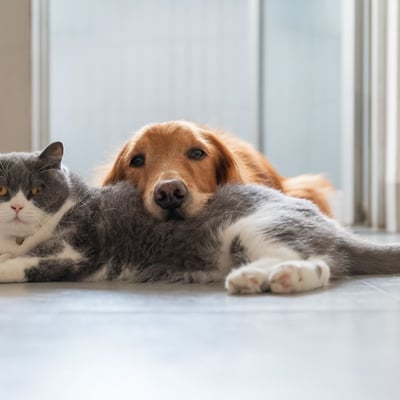
How to Introduce a Rescue Dog to Your Resident Cat
Worried your cat won't accept a new rescue dog? With the right introduction strategy, many dogs and cats learn to …
Read More →
The Spanish Mastiff is a large and powerful breed, known for its gentle temperament and protective nature. They are intelligent and somewhat independent, making them a good fit for experienced dog owners who can provide consistent training and socialization. Despite their size, they have moderate exercise needs and are generally content with a good walk or play session each day. Their short coat requires minimal grooming, but they are prone to certain health issues due to their size. They are generally sociable and get along well with other pets and children, but early socialization is key to ensure they are comfortable in various situations.
The Spanish Mastiff is an ancient breed that was originally used to guard livestock against predators and thieves.
When adopting a Spanish Mastiff, be prepared for a large dog with moderate exercise needs. They require a home with enough space to move comfortably. Early socialization and consistent training are key to raising a well-behaved Spanish Mastiff. Due to their size, potential health issues should be considered, so be prepared for possible vet expenses.
Spanish Mastiffs have a life expectancy of 10-12 years, which is typical for a breed of their size.
The Spanish Mastiff is a giant breed. Males typically weigh between 110-150 lbs and stand 28-35 inches tall at the shoulder, while females are slightly smaller.
Spanish Mastiffs are known for their calm and gentle temperament. They are protective and loyal to their families, but can be wary of strangers.
Despite their size, Spanish Mastiffs have moderate exercise needs. A good walk or play session each day is usually sufficient.
Their short coat requires minimal grooming, but they do shed heavily twice a year. Regular brushing during these times can help manage shedding.
Spanish Mastiffs have a life expectancy of 10-12 years, which is typical for a breed of their size.
Like many large breeds, Spanish Mastiffs are prone to certain health issues such as hip dysplasia, obesity, and heart conditions. Regular vet check-ups and a healthy diet can help manage these risks.
Spanish Mastiffs are intelligent and somewhat independent. They can be stubborn at times, but with consistent training, they can learn a wide variety of commands and tasks.
Due to their independent nature, Spanish Mastiffs can be a bit challenging to train. They respond best to positive reinforcement methods and require a patient and consistent handler.
Spanish Mastiffs are generally sociable and get along well with other pets and children. However, early socialization is key to ensure they are comfortable in various situations.
Worried your cat won't accept a new rescue dog? With the right introduction strategy, many dogs and cats learn to …
Don't let allergies stop your family from adopting a pet. Learn about hypoallergenic breeds and proven allergy management strategies.

Learn the complete vaccination schedule for your rescue pet, from puppy shots to adult boosters. Essential health timeline every new …
Every pet is an individual. For specifics on temperament and history, contact the rescue organization caring for the dog you're interested in.

No commitment. Cancel anytime.
Get ALL premium features listed above
Subscriptions will automatically renew unless canceled within 24-hours before the end of the current period. You can cancel anytime with your account settings. Any unused portion of a free trial period will be forfeited if you purchase a subscription.