












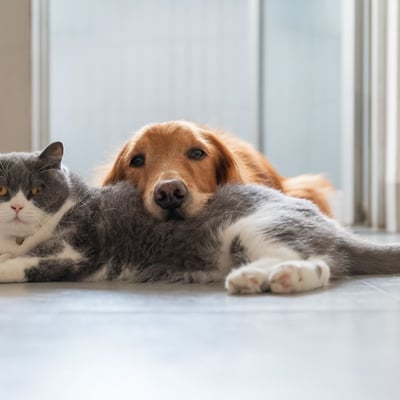
How to Introduce a Rescue Dog to Your Resident Cat
Worried your cat won't accept a new rescue dog? With the right introduction strategy, many dogs and cats learn to …
Read More →
Pheasants are not traditional pets but are often kept for their beautiful plumage and interesting behaviors. They are medium to large-sized birds, known for their striking colors and long tails. Pheasants are generally shy and prefer to live in large, open spaces where they can roam freely. They require a good amount of exercise and have a moderate life expectancy. Pheasants are not particularly high maintenance in terms of grooming but do require a clean and safe environment. They are intelligent birds but can be challenging to train due to their independent nature. Pheasants are not very social with humans but can coexist peacefully with other birds if given enough space.
The male pheasant, or rooster, is known for its colorful and ornate plumage, which it uses to attract females during the breeding season.
Adopting a pheasant requires a commitment to providing a large, safe, and clean environment for the bird. They are not traditional pets and are not recommended for those looking for a highly interactive or affectionate pet. Potential adopters should also be prepared for the bird's long lifespan and potential health needs.
Pheasants have a moderate life expectancy. They can live for 5 to 10 years in captivity, depending on their care and environment.
Pheasants are medium to large-sized birds, with males typically larger and more colorful than females. They can range in size from 60 to 90 cm in length, including their long tails.
Pheasants are generally shy and prefer to keep to themselves. They are not particularly affectionate or interactive with humans, but they can be peaceful and calm if given enough space and a stress-free environment.
Pheasants require a good amount of exercise. They are active birds that like to roam, forage, and fly short distances. A large, open space is ideal for them to get the exercise they need.
Pheasants are not particularly high maintenance in terms of grooming. They preen themselves to keep their feathers clean and shiny. However, they do require a clean and safe environment to prevent diseases.
Pheasants have a moderate life expectancy. They can live for 5 to 10 years in captivity, depending on their care and environment.
Pheasants are generally healthy birds but can be prone to parasites and diseases if not kept in a clean environment. Regular veterinary check-ups are recommended.
Pheasants are intelligent birds with a keen sense of their surroundings. They are good at finding food and hiding from predators.
Pheasants can be challenging to train due to their independent and shy nature. They are not typically trained for specific tasks or tricks like some other pet birds.
Pheasants are not very social with humans but can coexist peacefully with other birds if given enough space. They are not typically aggressive but can be territorial.
Worried your cat won't accept a new rescue dog? With the right introduction strategy, many dogs and cats learn to …
Don't let allergies stop your family from adopting a pet. Learn about hypoallergenic breeds and proven allergy management strategies.

Learn the complete vaccination schedule for your rescue pet, from puppy shots to adult boosters. Essential health timeline every new …
Every pet is an individual. For specifics on temperament and history, contact the rescue organization caring for the dog you're interested in.

No commitment. Cancel anytime.
Get ALL premium features listed above
Subscriptions will automatically renew unless canceled within 24-hours before the end of the current period. You can cancel anytime with your account settings. Any unused portion of a free trial period will be forfeited if you purchase a subscription.